Ever spotted a second-hand camera or lens you loved, but wondered in the back of your mind, "How much wear can it take?" or "What if it breaks after I use it a few times?" It's a question many second-hand camera buyers face. Today, 247IT2U is here to clear up that confusion and put your mind at ease—plus we'll share simple condition-check techniques that even beginners can follow. We promise you'll find a camera and lens you love, ready to use without worry.
How much heavy use will damage a second-hand camera or lens?
The truth is, whether a camera or lens "breaks" depends on many factors—not just heavy use alone. A good camera or lens that has been properly maintained, even if it has seen some use, can still work well for a long time. What matters is understanding the usage history and overall condition of the equipment. We'll look at how to do that in the next section.
Simple techniques for checking a camera's basic condition
When you have the camera in hand, the first thing to do is inspect the exterior. Look for signs of impact, dents, cracks, or scratches on the body. Heavy marks may indicate the camera has suffered impacts and could affect internal function. Try turning it on and off, test the buttons, and press the shutter several times to see if the camera responds well.
For the camera sensor, take a photo of a plain white or light-colored background like a wall, and zoom in on the LCD screen. If you spot dark spots or strange marks, it could be dust on the sensor—sometimes cleanable, but if there are deep scratches, that's more serious. Don't worry too much though; in some cases it might just be dust that can be cleaned.
Simple techniques for checking a lens's basic condition
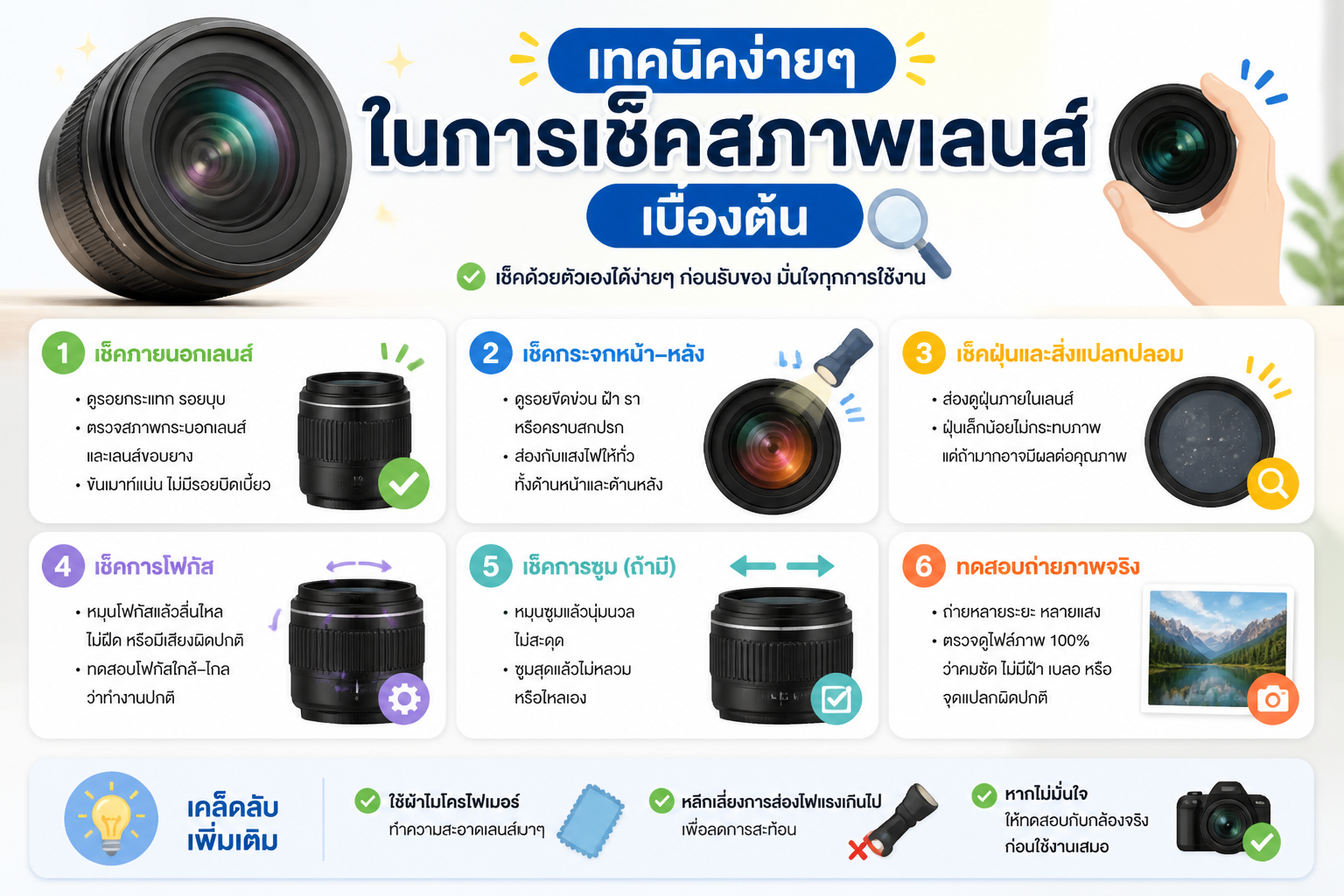
Similar to the camera, start with the exterior. Look at the overall appearance of the lens. Try rotating the focus ring and aperture ring (if present) to see if they turn smoothly, without sticking, strange noises, or feeling too loose.
The most important part of a lens is the glass elements. Check for dust, fungus, haze, or scratches on the glass surface. Small dust not in critical areas usually doesn't affect image quality much, but fungus, haze, or large scratches in visible areas may impact image quality.
Hold the lens up to light and look at it from both the front and back to see details more clearly. If it's a lens with image stabilization (IS/VR/OS), turn it on and listen for any unusual sounds.
What should you do if you find minor issues?
If you find minor issues like dust on the sensor or small dust inside the lens, it doesn't mean the camera or lens isn't worth buying. Sometimes these things can be fixed, or they're minor issues that don't significantly affect real-world use. What matters is communicating with the shop or seller to ask for more information about those issues and use that to inform your decision.
We hope this information helps beginners looking for a second-hand camera and lens they love. A thorough basic inspection will help you feel confident and get equipment that makes you happy to use.
How to buy a second-hand camera wisely
Before buying a second-hand camera, we recommend checking the exterior condition, testing all functions, and asking the trusted shop about usage history. Browse all second-hand cameras on our shop page.